
Tips for Getting the Best Out of Your Printer
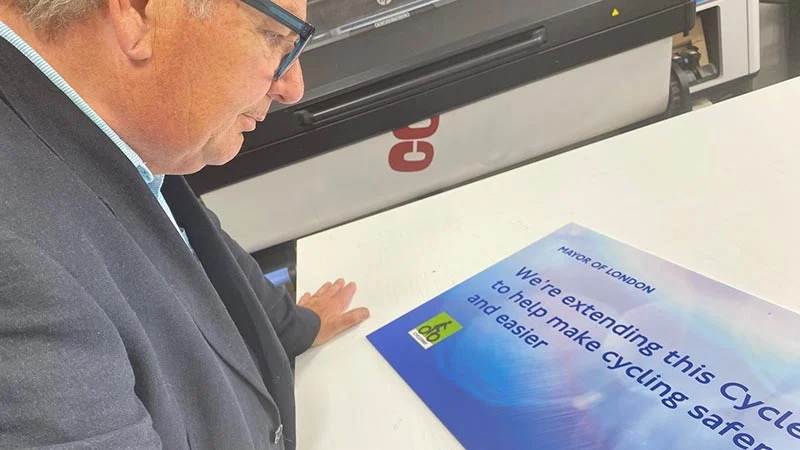
With good communication and the right printer for your job, there’s every chance of getting it spot on every time, writes Andrew Ballington-James, MD and Founder of Just AJD.
Almost everyone has a story about being let down by a printer. The delivery was late, the colours were wrong, the banner collapsed in a storm, or an indoor one was too small for the location and cut a feeble impression. The list goes on.
It needn’t be this way. Here are some tips, based on decades of experience, for getting the best out of your printer and achieving results that leave you genuinely satisfied.
Talk to your printer
First and foremost, have a conversation. Don’t just place an order online or by email — it may seem quicker, but it can cost more in the long run. Talking through your project helps your printer understand what you want to achieve and allows them to make recommendations based on experience.
If your printer will also be installing the artwork — for example, permanent exterior signage or banners exposed to months of weather and potential vandalism — their input is even more vital.
There are also important health and safety considerations during and after installation. For instance, when we fitted hundreds of lamppost banners for Transport for London, they had to pass independent wind-speed tests before approval. Instead of double-hemming, we triple-hemmed the banners — a belt-and-braces approach to ensure they wouldn’t tear in strong winds.
The lesson: only by talking to your printer or installer can you fully understand the process, choose the right materials and fixtures, and avoid wasting time and money going down the wrong route.
Choose the right materials and fixtures
Banners on railings, for example, catch the wind like sails and can easily rip. We advise using mesh banners that allow wind to pass through. Similarly, avoid cheaper plastic eyelets — brass eyelets fitted under pressure are far more durable. They cost a little more, but the cheaper options are a false economy.

Diwali-Celebrations-Banner
Colourful banner for Watford Borough Council celebrating Diwali
Expect honesty and transparency
Good two-way communication is essential, but so is honesty. If we don’t believe we can meet a brief — or if a job looks good only on paper but is unsafe or impractical — we will politely decline.
Not every printer is so scrupulous, so for essential or high-value projects, it’s wise to take up references as well as read the testimonials that match your job. At the very least, ask to see examples of similar work they’ve completed for other customers.
Plan ahead delivery deadlines
Late delivery is one of the most common complaints against printers. Again, open communication helps here: your printer can set realistic deadlines and allow for possible courier delays or venue complications.
Most printers offer next-day delivery, but some have access to round-the-clock couriers for urgent jobs. This will, of course, cost more so accurate forward planning, with realistic margins for slippage, is always preferable.
For events such as conferences or exhibitions, last-minute items like business cards or name tags are often needed. To avoid stress or panic make a checklist and run it past your printer, an experienced one will spot anything you might have missed.
Ask about staggered delivery
Another useful service we offer is staggered delivery. We’re happy to take orders weeks or months in advance and dispatch only when the items are needed. This gives customers peace of mind and often saves money, as we can print in bulk alongside other jobs and pass on the discounts.
When planning your project, also confirm that your printer’s distribution network can actually reach your chosen destination — not all printers that claim national coverage can deliver it in practice.
There’s much more that could be said, but the key message is simple: talk to your printer. Nothing beats direct dialogue for producing the best results and getting exactly what you need.
